 Mirë se erdhët
Where we came from
The Illyrians and Albanian origins
Ask an Albanian where we come from and you will often hear one word: Illyrians. Here is what the sources actually say, what is solid, and what is still open.
Updated
Short answer
Descent from the ancient Illyrians is the most widely held view, and Albanians generally see themselves as their descendants. It is not proven: so little Illyrian survives that linguists are split between those who accept Illyrian descent, those who think Albanian comes from a close relative of Illyrian, and those who say the evidence is not enough. Some scholars point to Thracian or Dacian instead.
Verified · checked on 25 Oct 2026
Source: Britannica: Illyria
What is solid
Verified · checked on 25 Oct 2026
Illyrians lived in the western Balkans from about the 10th century BCE. Illyrian kingdoms flourished between the 5th and 2nd centuries BCE, and the last one had its capital at Scodra, today's Shkodër.
Rome fought the Illyrians from 229 BCE and had control of Illyria by 168 BCE, when King Genthius surrendered. The land became the Roman province of Illyricum.
Sources: Britannica: Illyria · Britannica: History of Albania
Why the debate is still open
Unknown · checked on 25 Oct 2026
The origin of Albanians is not definitely known. Only three or four words of Illyrian are identified without doubt, so there is very little to compare with Albanian.
Albanian is its own branch of the Indo-European family, recognised as Indo-European by Franz Bopp in 1854. Both Illyrian and Dacian have been tentatively proposed as its ancestor or nearest relative. The first written record of Albanian is from 1462.
So the honest answer: Illyrian descent is the most widely held view, Thracian or Dacian is a minority view, and the evidence is too thin to close the question.
Sources: Britannica: Illyria · Britannica: Albanian language · Britannica: History of Albania
Queen Teuta
Verified · checked on 25 Oct 2026
Teuta ruled the Illyrian kingdom as regent after the death of her husband, King Agron. Rome went to war against the Illyrians under her in 229 BCE, and she submitted to Rome in 228 BCE.
Sources: Britannica: Teuta · Britannica: Illyria · Britannica: History of Albania
Ancient sites you can visit
Verified · checked on 25 Oct 2026
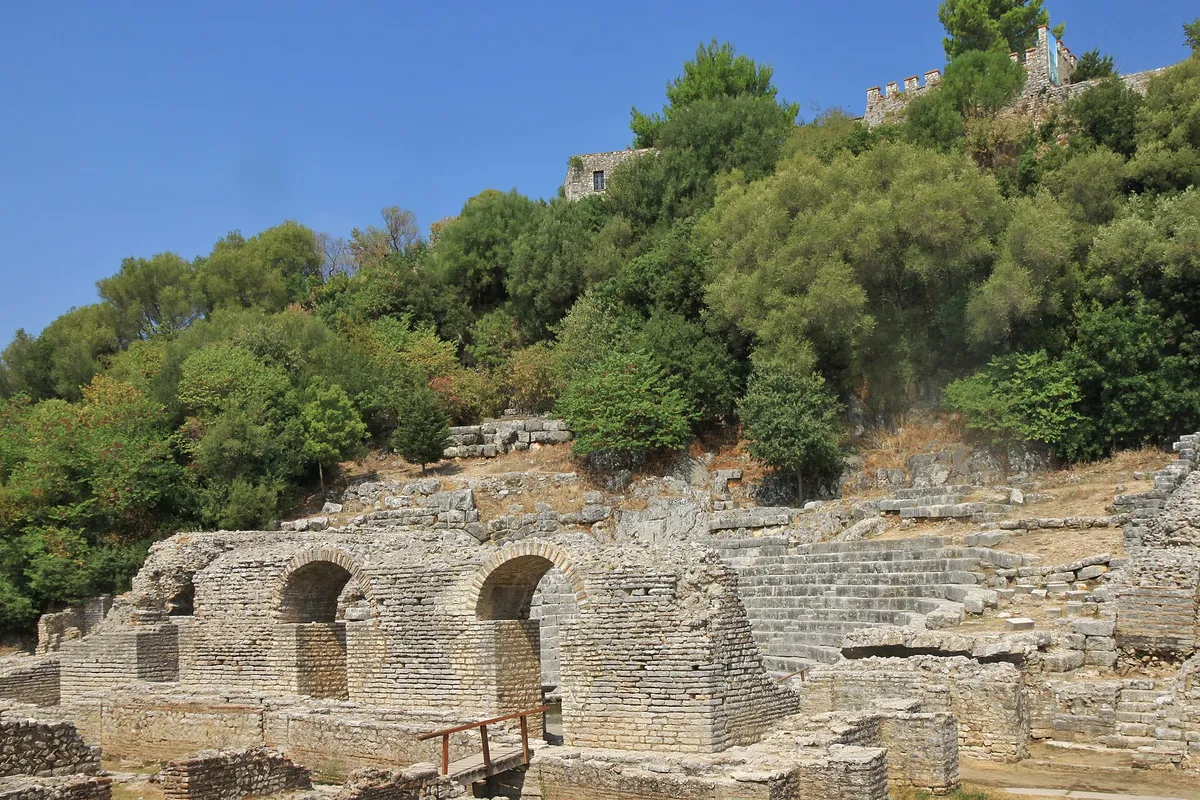
Butrint, about 20 km from Saranda, is a UNESCO World Heritage site (listed 1992, extended 1999). It became a Roman colony in 44 BC and has a theatre and an early Christian baptistery. It has been a national park since 2005.
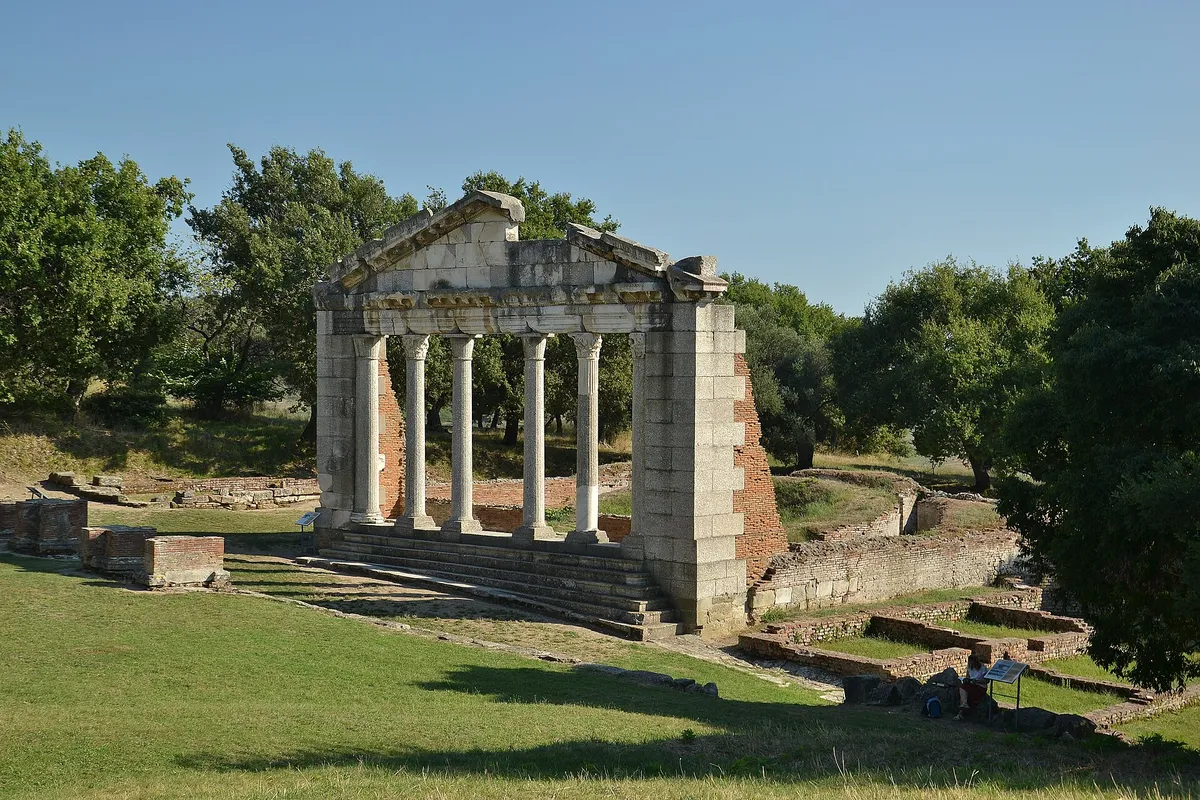
Apollonia, near today's Vlorë, was a Greek colony founded on Illyrian territory; the Greek colonies on this coast were founded between the 8th and 6th centuries BCE. In Roman times it was known for its school of philosophy.
Byllis, 1.5 km from the village of Hekal in Mallakastra, was founded around 370–350 BCE as the capital of the Bylline community, and the park describes it as the largest Illyrian city in southern Illyria. Its theatre held an estimated 7,500 people.
Sources: UNESCO World Heritage: Butrint · Britannica: Apollonia · Britannica: History of Albania · National Tourism Agency (AKT): Byllis · Apollonia Archaeological Park administration: Byllis history
Dardania and Kosovo
Verified · checked on 25 Oct 2026
The Dardani are described as an Illyrian people, also linked with the Thracians. Their land covered today's Kosovo and parts of southern Serbia, North Macedonia and northern Albania. Their name may come from the same root as the Albanian word dardhë, pear.
Ancient writers show the Dardanians strong enough to challenge Macedonia. Under Rome, a soldier of the imperial horse guard was still recorded on his gravestone as nat(ione) Dardanus, Dardanian by origin.
Sources: Oxford Classical Dictionary: Dardani · KOSOVA journal (Institute of History, Prishtina), 2025: Dardanët dhe Dardania
From Arbër to Shqipëri
Verified · checked on 25 Oct 2026
A people called the Albanoi are first mentioned by Ptolemy in the 2nd century CE. The name later spread as Arbër and Arbëri, and Albania. The Arbëresh of southern Italy still use the old form.
Shqipëri replaced the older name in the 16th and 17th centuries. Britannica notes it is better explained from shqip, to speak clearly, than from shqipe, eagle.
Albanian has two main dialects, Gheg in the north and Tosk in the south, divided roughly by the Shkumbin river.
Sources: Britannica: History of Albania · Britannica: Albanian language
Frequently asked questions
Are Albanians descended from the Illyrians?
It is the most widely held view, and most Albanians see themselves that way, but it is not proven. Very little Illyrian survives, so linguists are divided and some point to Thracian or Dacian.
Who was Queen Teuta?
She ruled the Illyrian kingdom as regent after King Agron died. Rome fought her from 229 BCE and she submitted in 228 BCE.
Were the Dardanians Illyrian?
They are described as an Illyrian people, also linked with the Thracians, living in today's Kosovo and nearby lands.
Where can I see Illyrian and ancient sites?
Butrint near Saranda (UNESCO), Apollonia near Vlorë and Fier, and Byllis near Hekal in Mallakastra are the best known in Albania.
Does Shqipëri mean land of eagles?
That is the popular reading, but Britannica says the name is better explained from shqip, to speak clearly.
Sources
- Britannica: History of Albania
- Britannica: Illyria
- Britannica: Albanian language
- Britannica: Albania
- Britannica: Teuta
- Britannica: Apollonia
- UNESCO World Heritage: Butrint
- National Tourism Agency (AKT): Byllis
- Apollonia Archaeological Park administration: Byllis history
- Oxford Classical Dictionary: Dardani
- KOSOVA journal (Institute of History, Prishtina), 2025: Dardanët dhe Dardania
All sources checked on 25 Oct 2026. Anything we could not source was left out. Spotted a mistake? Tell us and we will fix it.
More photos of Albanian traditions on Beatrika's Instagram: @traditat_shqiptaree ↗
Keep exploring
- Flag Day 28 November: trip checklist
- Albanian names
- Besa and the Kanun: the Albanian code of honour
- Albanian traditional dress: xhubleta and plis
- Albanian folk music: iso-polyphony, lahuta, çifteli
- Dita e Verës: Summer Day, 14 March
- Albanian hospitality: oda, coffee, bread and salt
- Albanian wedding traditions and bride customs
- All traditions
Weekly newsletter
Stay in the loop
New places, events and travel news from Kosovo and Albania, for the diaspora and visitors alike, once a week. Free.
We’ll only use your email for this newsletter. Unsubscribe anytime. Privacy