 Mirë se erdhët
How we marry
Albanian wedding traditions and bride customs
An Albanian wedding is not one day. It is a run of customs that moves the bride from her parents' house to the groom's, and every region, in Kosovo and in Albania, does it a little differently. Here is what the ethnographers have recorded: the bride's customs, the henna night, how the wedding days run, and how to dance when you get there.
Updated
Short answer
A traditional Albanian wedding is a run of days, not one ceremony. After the engagement, the bride's family holds the henna night (kanagjeq) and shows her dowry, and a close woman, the veshatore, dresses the bride and puts on the henna. On the wedding day the groom's party, the krushqit, fetch her with the flag and bring her to the groom's house, where the women welcome her with songs and the valle. In old Labëria, in southern Albania, the wedding ran a full week, Monday to Monday. In Opoja, in Kosovo, it lasts up to three days today, and diaspora couples often keep the customs by day and hold the party in a hotel in the evening.
Verified · checked on 29 Oct 2026
Sources: Lumnije Kadriu, Gjurmime Albanologjike 47 (2017): transnational marriages among Kosovo Albanian emigrants · Angjelina Hamza Hasanaj, Journal of Kosovo Music and Culture (2025): the Kosovar henna night · Jaho Cana, Studime Muzeologjike: the Lab marriage in Tepelenë · Carolin Leutloff-Grandits, Translocal Care across Kosovo's Borders (Berghahn, 2023, open access), ch. 6: weddings
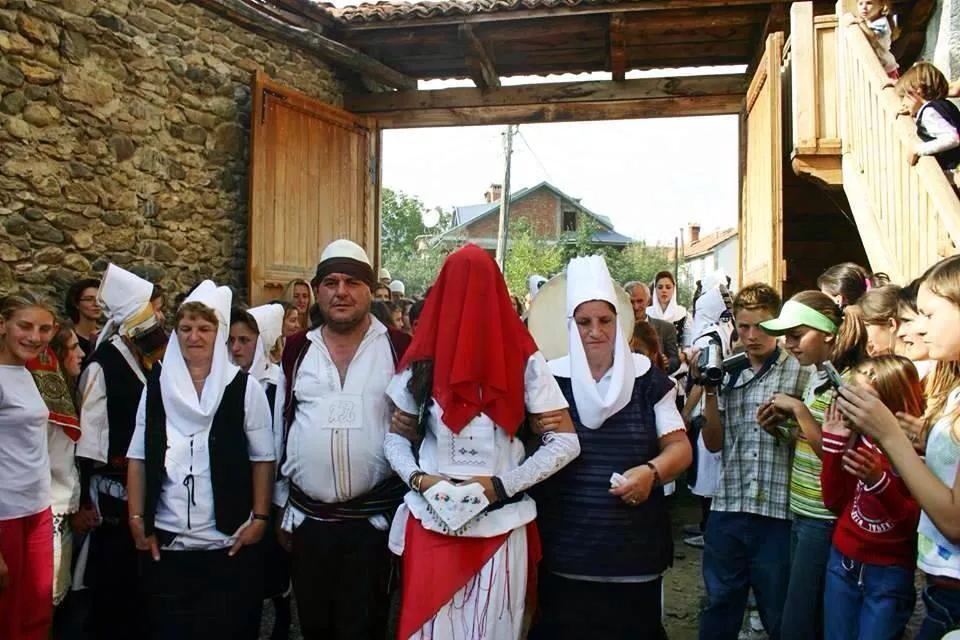
Albanian bride traditions
Verified · checked on 29 Oct 2026
The bride's customs start days before the wedding, at her parents' home. Researcher Vlorë Fetaj Berisha, quoted in a 2025 study of the Kosovar henna night, describes how the family planned the henna visit five weeks ahead without telling the bride. The night before, a daughter of the house or a paternal aunt (hallë) touched her head with wet wool and said “May your kanagjeq be blessed”, and from then she knew she would soon leave. The next day she went round the neighbours to greet them and say goodbye.
A close woman, the veshatore (called telake in some areas, such as Opoja), stays with her through the henna days. She dresses her, puts on the henna, sets out the dowry, keeps the money gifts (bakshish) and teaches the bride how to behave with her husband and his family. On her own henna night the bride does not sing; the women sing for her.
In Opoja, in southern Kosovo, the bride wears a white wedding dress with a red headscarf. As she is taken from her parents' home she keeps her eyes on the ground, out of respect for the groom's family and sadness at leaving her own. At the groom's house the mother-in-law or the eldest sister-in-law lifts the scarf and puts jewellery on her, and close relatives fix money in her hair. Some brides now look up or smile, and elders may criticise it.
In the old Lab wedding of southern Albania, the girls and women of the village met the bride with songs and valle, then she was seated in the women's room. On the closing evening the new bride served the people who had worked the wedding. In the time after, she visited the family's relatives and cooked for them, which was a kind of test of what she could cook and how well she could run a home.
Edith Durham recorded older threshold customs in 1909, from descendants of Kelmendi families settled in Hungary who said they still married by Kelmendi custom. The bride was led three times round the groom's house, an apple was thrown over the roof, and she was given corn. She had to step over the threshold with her right foot without stumbling, and took a little boy in her arms, a wish for a son that Durham says was common to Albania and Montenegro.
Sources: Angjelina Hamza Hasanaj, Journal of Kosovo Music and Culture (2025): the Kosovar henna night · Carolin Leutloff-Grandits, Translocal Care across Kosovo's Borders (Berghahn, 2023, open access), ch. 6: weddings · Jaho Cana, Studime Muzeologjike: the Lab marriage in Tepelenë · M. Edith Durham, High Albania (London: Edward Arnold, 1909), full text at the University of Pennsylvania digital library
The engagement
Verified · checked on 29 Oct 2026
Even today, when young people often meet and fall in love on their own, the mësit, the go-between, is still often involved, formally or as a gesture.
In Labëria, around Tepelenë, the two families first gave their word (zënia e fjalës), through the go-between or the groom's maternal uncle, the daja. At the engagement, the groom's side sent seven, nine or eleven krushq, always an odd number, led by the daja. He put the ring on the bride's finger first, then the groom did. This is called dhënia e nishaneve. A week later the same ceremony was repeated at the groom's house.
In Opoja, in southern Kosovo, the engagement is called prurja e mahramës, bringing the kerchief. When it arrives at the groom's house, the neighbourhood girls start singing the engagement songs.
Sources: Lumnije Kadriu, Gjurmime Albanologjike 47 (2017): transnational marriages among Kosovo Albanian emigrants · Jaho Cana, Studime Muzeologjike: the Lab marriage in Tepelenë · Muharrem and Valent Qafleshi, Gjurmime Albanologjike 50 (2020): the cultural heritage of Opoja
Henna night (kanagjegji)
Verified · checked on 29 Oct 2026
The henna night, called kanagjeq, nata e kanës or nata e bojës, is held at the bride's family home before she leaves. The henna days began several days before the wedding, on a day that varied by region (usually Monday, Thursday or Saturday), and lasted until she left. In the old way, this was the first time henna was put on her hair or hands.
In a 1979 study of the Kamenica area, Ajshe Berisha describes the mother setting the henna on a tray beside a pot of flowers and lit candles, and the girl putting out the candles in silence. Then her friends sing. One of the best-known songs goes: “The henna rises, drop by drop, tonight you are the flag among girls… tomorrow you are the flag among brides.”
Not all the songs are sad. Researchers at the Albanological Institute have recorded joyful songs at traditional henna nights too, some gently teasing the groom or the mother-in-law. Today many families hold it in a restaurant, often with modern music, and the English words “Bride to Be” have crept in.
Sources: Angjelina Hamza Hasanaj, Journal of Kosovo Music and Culture (2025): the Kosovar henna night · Visar Munishi, Gjurmime Albanologjike 50 (2020): songs of the traditional kanagjeq
The dowry (paja, çeizi)
Verified · checked on 29 Oct 2026
In Kosovo the dowry was shown on Saturday, also called women's day, when the women of the family, friends and relatives came to see it and brought small gifts for the bride. It was laid out in two rooms: one with the clothes and things the girl had made for herself, the other with gifts for the groom's family, laid out by the age and closeness of each of his relatives.
In the northern Albanian highlands, the wedding xhubleta was part of the dowry, worn on the wedding day and through the first year of marriage.
Sources: Angjelina Hamza Hasanaj, Journal of Kosovo Music and Culture (2025): the Kosovar henna night · UNESCO: Xhubleta, skills, craftsmanship and forms of usage (2022)
How a traditional wedding runs, day by day
Verified · checked on 29 Oct 2026
There is no single schedule: each region keeps its own order. The best-recorded full week is the old Lab wedding around Tepelenë, in southern Albania, written down by ethnographer Jaho Cana from the memories of elders. It ran from Monday to Monday. Weddings were held in autumn, once the harvest was in and the raki made, and never in the first ten days of August, which was believed to bring bad luck.
In Kosovo the order starts at the bride's home. The henna days begin several days before, the dowry is shown on Saturday, women's day, and on the wedding day the krushqit fetch the bride with the flag. At her house, men and women are received in separate rooms, drinks are served and the bride is shown to the guests. In Opoja villages today a wedding lasts up to three days, with music at the groom's house, and ends with the bride's arrival in a motorcade.
In Labëria, Orthodox families had the marriage blessed in church; for Muslim families there was no set religious rite.
The Lab wedding week, day by day
- Monday: the women of the family go out together for firewood, walking in a line with the national flag at the front, and the lady of the house gives them a simple lunch.
- Tuesday: the women decorate the house. The head of the household hands out the jobs, from roasting the meat to serving the men's and women's tables, and draws up the guest list.
- Wednesday: the invitations go out, three or four days ahead. In the evening relatives and neighbours bring gifts, the closest a ram, and the host opens the wedding. This night is the hapja e këngës, the opening of the song, spent singing and dancing.
- Thursday: people from the groom's side, always including one of his maternal uncles (daja), go to the bride's family with gifts for her closest relatives, and agree how many krushq will come on Sunday and at what hour.
- Friday: the singing and dancing reach their height. The women roll pastry for byrek, lakror and petanik and make bakllava and revani, and the meat is slaughtered and roasted.
- Saturday: the groom is washed, has his hair cut, is shaved and dressed in his wedding clothes. At dinner the host names the krushq, led by the most capable and mature daja.
- Sunday: the high point. The krushq fetch the bride, everyone goes out to the yard to meet her, and the women welcome her with songs and valle. A great dinner follows that can last until morning.
- Monday: a closing dinner for everyone who served at the wedding, where the new bride serves them.
Sources: Jaho Cana, Studime Muzeologjike: the Lab marriage in Tepelenë · Angjelina Hamza Hasanaj, Journal of Kosovo Music and Culture (2025): the Kosovar henna night · Lumnije Kadriu, Gjurmime Albanologjike 47 (2017): transnational marriages among Kosovo Albanian emigrants · Carolin Leutloff-Grandits, Translocal Care across Kosovo's Borders (Berghahn, 2023, open access), ch. 6: weddings
Fetching the bride
Verified · checked on 29 Oct 2026
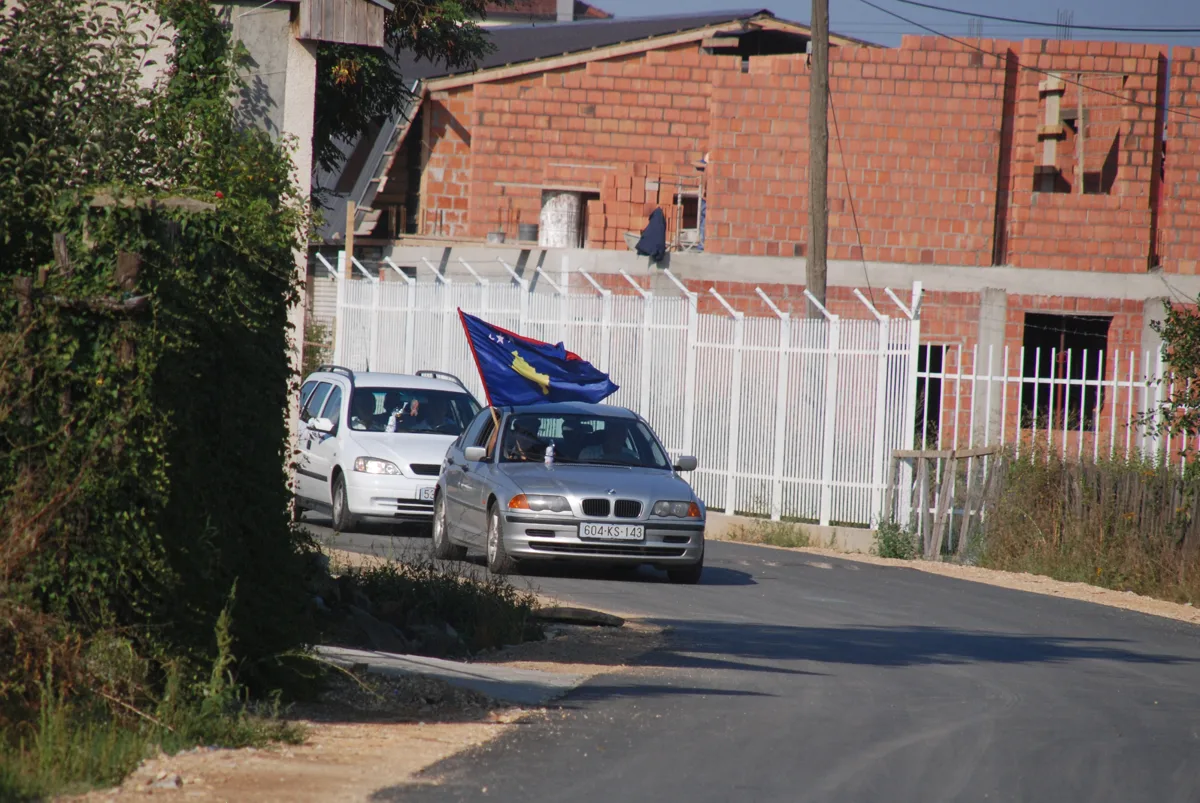
On the wedding day the krushqit, with a few women, go to fetch the bride from her home and bring her to the groom's. They once went by cart and horse; today they go by car. They must carry the flag, which they hand to the bride's family to hold while the ceremony at her house goes on. Arriving and leaving is loud, today with car horns.
In Opoja, researcher Carolin Leutloff-Grandits counted often more than 100 people travelling by car to escort the bride, and calls this the climax of the wedding.
Sources: Lumnije Kadriu, Gjurmime Albanologjike 47 (2017): transnational marriages among Kosovo Albanian emigrants · Carolin Leutloff-Grandits, Translocal Care across Kosovo's Borders (Berghahn, 2023, open access), ch. 6: weddings
The music
Verified · checked on 29 Oct 2026
In Opoja, weddings are now mostly held in wedding halls, but they keep their own dances played on the lodra, a big two-skinned drum, and the cyrla, a shawm. In Kosovo generally, shawm-and-drum ensembles play at weddings, and rich weddings sometimes hired a second band too, while women sang to the frame drum (def).
The south sounds different: Tosk dances are usually accompanied by def, violin, clarinet, lauto and accordion.
Tallava is not an old wedding tradition. Ethnomusicologist Svanibor Pettan traced it to Kosovo Roma women's singing to the frame drum, which by around 1990 had become a loud, amplified genre played by men. It is popular at many weddings today, but it is a recent genre.
Sources: Muharrem and Valent Qafleshi, Gjurmime Albanologjike 50 (2020): the cultural heritage of Opoja · Svanibor Pettan: Male, female and beyond in the culture and music of Roma in Kosovo · Society of Folk Dance Historians: Albanian folklore
Kosovo and Albania: how customs differ
Verified · checked on 29 Oct 2026
In Kosovo: Opoja brides leave in a red headscarf with their eyes down, and Opoja is known for Kollçoja, a set of 11 men's dances. In Rugova, when the bride got down from the horse, a clown figure called the xhamall played around her to draw the guests' eyes away from her, a protection against the evil eye; in Has the same figure was called the hakubet. Even the day the henna days start changes from region to region.
In Albania: in Labëria the wedding took a whole week, and the groom's maternal uncle, the daja, led the krushq at the engagement and on the wedding day. In the northern highlands, the wedding xhubleta was part of the bride's dowry, worn on the wedding day and through the first year of marriage. Among Kelmendi families, Durham recorded the bride being led three times round the groom's house before stepping in with her right foot.
Sources: Muharrem and Valent Qafleshi, Gjurmime Albanologjike 50 (2020): the cultural heritage of Opoja · Bashkim Lajçi, Gjurmime Albanologjike 48 (2018): the xhamall in folk tradition · Carolin Leutloff-Grandits, Translocal Care across Kosovo's Borders (Berghahn, 2023, open access), ch. 6: weddings · Angjelina Hamza Hasanaj, Journal of Kosovo Music and Culture (2025): the Kosovar henna night · Jaho Cana, Studime Muzeologjike: the Lab marriage in Tepelenë · UNESCO: Xhubleta, skills, craftsmanship and forms of usage (2022) · M. Edith Durham, High Albania (London: Edward Arnold, 1909), full text at the University of Pennsylvania digital library
How the wedding dances go
Estimate · checked on 29 Oct 2026
Most wedding valle are line dances: everyone holds hands in a long open line that moves round the floor, with a leader at the head. The steps below follow one tutorial by a creator who made it for her own wedding guests. Families and regions dance differently, so treat it as a starting point and watch the people around you.
Other wedding dances work differently. In one, the women form a circle with hands joined as the new bride enters, with the mother-in-law in the middle. The k'cimi of Tropojë, on UNESCO's list since 2024, is danced mostly in couples, face to face without touching, and women may wave a handkerchief, usually red. Valle Kuksit from the north is now a wedding dance all over Albania, and Napoloni is a Tirana wedding dance in couples.
A step-by-step tutorial in English, posted on the creator's own channel. She made it for her wedding guests. Starts at the steps.
The official channel of Albania's national theatre of opera, ballet and folk ensemble, filmed 14 July 2017.
The basic steps
- Join the line by stepping in and holding hands with the people either side. You can join in the middle, not only at the end.
- The line moves counterclockwise. The leader is at the head and someone holds the tail.
- The pattern has 8 counts in two halves. Always start with the left foot, moving to the side.
- Counts 1 to 4: left foot crosses over, right steps, left crosses over, right kicks.
- Counts 5 to 8: right lands, left rocks back, right steps, left kicks. Then repeat.
- If you lose the beat, watch the leader and pick it up again. The leader may hand over the lead and move to the tail or into the middle.
Sources: Gida's Pot of Stew (YouTube, 2022): How to do the Albanian line dance, valle tutorial · TKOB official YouTube channel: dances from Tirana weddings (2017) · Society of Folk Dance Historians: Albanian folklore · UNESCO: K'cimi dancing of Tropojë (2024)
What diaspora weddings keep
Verified · checked on 29 Oct 2026
Weddings used to be held in autumn. Diaspora weddings from Kosovo are now held in summer, so couples book a hotel or restaurant and the musicians up to a year ahead. One couple in the study expected about 500 guests.
The traditional bride's costume is one of the things diaspora families care most about keeping. They can cost up to €3,000, and many brides get both a regional costume and the allaturka style worn more in Kosovo. Back abroad, women watch the wedding videos together all year.
Sources: Lumnije Kadriu, Gjurmime Albanologjike 47 (2017): transnational marriages among Kosovo Albanian emigrants · Angjelina Hamza Hasanaj, Journal of Kosovo Music and Culture (2025): the Kosovar henna night
Frequently asked questions
What are Albanian bride traditions?
Days at her parents' home with the henna night (kanagjeq) and the dowry on show, a farewell round of the neighbours, then on the wedding day being fetched by the krushqit with the flag. In Opoja she leaves in a red headscarf with her eyes down, and at the groom's house the mother-in-law lifts the scarf and relatives fix money in her hair.
What happens at a traditional wedding in Albania?
In the old Lab wedding of southern Albania, each day had its task: firewood on Monday, the opening of the song with gifts on Wednesday, cooking on Friday, dressing the groom on Saturday, fetching the bride and a great dinner on Sunday, and a closing dinner for the helpers on Monday.
How long does an Albanian wedding last?
Traditionally several days. The old Lab wedding lasted a full week, Monday to Monday; Opoja weddings in Kosovo last up to three days today; and many diaspora couples hold the customs by day and the party in a hotel in the evening.
What are the main Albanian wedding traditions?
The engagement, the henna night (kanagjeq) and the dowry at the bride's home, the groom's side (krushqit) fetching the bride with the flag, and days of song and valle.
What is an Albanian henna night?
The kanagjeq or nata e kanës, held at the bride's home before she leaves. A close woman, the veshatore, dresses her and puts on the henna while her friends sing.
What happens when the bride leaves her parents' home?
Traditionally the krushqit (the groom's side) come to fetch her and take her to the groom's home. They carry a flag, which the bride's family holds while the ceremony at her house goes on, and the arrival and departure are announced with a lot of noise, today mostly car horns.
What does a traditional Albanian bride wear?
It depends on the region. In the northern Albanian highlands it was the xhubleta, which UNESCO says brides took as part of their dowry and wore on the wedding day and through the first year. In Kosovo, diaspora brides often order the traditional costume of their home region, and many have both that and the ‘allaturka’ costume.
Why do the krushqit carry a flag?
Carrying the flag when fetching the bride is described as obligatory. The krushqit hand it to the bride's family, who hold it while the ceremony at her house goes on.
Why does the Albanian bride keep her eyes down?
In Opoja, out of respect for the groom's family and sadness at leaving her own. Some brides now look up or smile.
How do I dance the valle at an Albanian wedding?
Hold hands in the line, start with the left foot and move counterclockwise. One common pattern has 8 counts; when in doubt, watch the leader.
Is tallava traditional Albanian wedding music?
No. It grew out of Kosovo Roma women's frame-drum singing and became an amplified genre around 1990. The older wedding sound is the drum and shawm (lodra and cyrla) in the north and def, clarinet and violin in the south.
Sources
- Lumnije Kadriu, Gjurmime Albanologjike 47 (2017): transnational marriages among Kosovo Albanian emigrants
- Jaho Cana, Studime Muzeologjike: the Lab marriage in Tepelenë
- Angjelina Hamza Hasanaj, Journal of Kosovo Music and Culture (2025): the Kosovar henna night
- Visar Munishi, Gjurmime Albanologjike 50 (2020): songs of the traditional kanagjeq
- Carolin Leutloff-Grandits, Translocal Care across Kosovo's Borders (Berghahn, 2023, open access), ch. 6: weddings
- Muharrem and Valent Qafleshi, Gjurmime Albanologjike 50 (2020): the cultural heritage of Opoja
- M. Edith Durham, High Albania (London: Edward Arnold, 1909), full text at the University of Pennsylvania digital library
- Bashkim Lajçi, Gjurmime Albanologjike 48 (2018): the xhamall in folk tradition
- Svanibor Pettan: Male, female and beyond in the culture and music of Roma in Kosovo
- Society of Folk Dance Historians: Albanian folklore
- UNESCO: K'cimi dancing of Tropojë (2024)
- UNESCO: Xhubleta, skills, craftsmanship and forms of usage (2022)
- TKOB official YouTube channel: dances from Tirana weddings (2017)
- Gida's Pot of Stew (YouTube, 2022): How to do the Albanian line dance, valle tutorial
All sources checked on 29 Oct 2026. Anything we could not source was left out. Spotted a mistake? Tell us and we will fix it.
More photos of Albanian traditions on Beatrika's Instagram: @traditat_shqiptaree ↗
Keep exploring
- Planning an Albanian wedding: venues and season
- Albanian concerts and events
- First time in Albania or Kosovo
- Traditional dress
- Folk music
- Albanian recipes
- The Illyrians and Albanian origins
- Besa and the Kanun: the Albanian code of honour
- Albanian traditional dress: xhubleta and plis
- Albanian folk music: iso-polyphony, lahuta, çifteli
- Dita e Verës: Summer Day, 14 March
- Albanian hospitality: oda, coffee, bread and salt
- All traditions
Weekly newsletter
Stay in the loop
New places, events and travel news from Kosovo and Albania, for the diaspora and visitors alike, once a week. Free.
We’ll only use your email for this newsletter. Unsubscribe anytime. Privacy